Cave Art Cave Art Wooly Mammoth to the Left
| Grotte de Rouffignac | |
 Rouffignac Cave | |
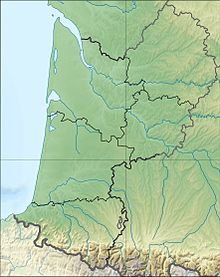
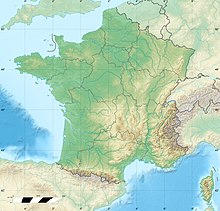
| Location in France Show map of Aquitaine Rouffignac Cave (France) Testify map of France | |
| Alternative name | Cave of the hundred mammoths, Miremont cavern, Cro des Cluzeau, Cro de Granville |
|---|---|
| Location | Rouffignac-Saint-Cernin-de-Reilhac |
| Region | Dordogne, France |
| Coordinates | 45°00′32″N 0°59′15″E / 45.00889°North 0.98750°E / 45.00889; 0.98750 Coordinates: 45°00′32″N 0°59′15″Due east / 45.00889°N 0.98750°E / 45.00889; 0.98750 |
| History | |
| Cultures | Magdalenian |
| Site notes | |
| UNESCO Earth Heritage Site | |
| Official name | Cro de Granville (cro de Rouffignac) |
| Part of | Prehistoric Sites and Decorated Caves of the Vézère Valley |
| Criteria | Cultural: (i), (three) |
| Reference | 85-012 |
| Inscription | 1979 (3rd Session) |
| Area | 51.76 ha (0.1998 sq mi) |

The Rouffignac cave, in the French commune of Rouffignac-Saint-Cernin-de-Reilhac in the Dordogne département, contains over 250 engravings and cave paintings dating dorsum to the Upper Paleolithic. In conjunction with other caves and abris of the Vézère valley, the Rouffignac cave was classified a Monument historique in 1957 and a world heritage site in 1979 past UNESCO every bit function of the Prehistoric Sites and Busy Caves of the Vézère Valley.[1]
Geography and description of the cavern [edit]
The Cave of the hundred mammoths, also known as Miremont cave, Cro des Cluzeau or Cro de Granville, is about five km (3.i mi) s of Rouffignac on a hill slope along the right-hand side of the La Binche river, a left tributary of the Manaurie. Perched only about i kilometer further east on the contrary side of the valley is the little hamlet of Fleurac. The rocks of the cavern are flat-lying limestones belonging to the uppermost Coniacian; they are very rich in flint nodules. These rocks together with overlying Santonian rocks form the limestone plateau of Légal, the separate between the drainage basins of the rivers Lisle and Vézère.
The Rouffignac cave and the Villars Cave possess the about extensive cave organisation of the Périgord, with more than viii km (5.0 mi) of hush-hush passageways. There are ten natural shafts that lead to a deeper level. So far, a further 4 km (2.v mi) of passageways have been explored in this deeper level. Beneath the deeper level exists a bottom level with a modest underground rivulet. Visitors of the cave board an electric railroad train that takes them about two km (1.2 mi) into the interior.[2]
The program of the cavern reveals a fractal-like dendritic pattern that is not random but organized along certain preferred directions. Presumably the cave was formed during the Pliocene about 3 to 2 million years ago. Water had infiltrated the bedrock along certain zones of weakness and dissolved the limestone. Today this process has come to an cease, and the cavern is generally dry except for the rivulet forth the base level.
History [edit]
The Rouffignac cave was mentioned in 1575 by François de Belleforest. In his Cosmographie universelle he cites "paintings and beast traces". In the 19th century the cavern was known equally a tourist attraction. Famous archeologists such as Henri Breuil, André Celebrity and Édouard-Alfred Martel had visited the cave in the early on 20th century, but it was only in 1956 that Louis-René Nougier and Romain Robert, two prehistorians from the Pyrenees, rediscovered and confirmed the cave art.[3] During the Second World War the cave served as a hibernate-out for the French Résistance. In 1959 the cave was officially opened for visitors. In his editorial in 'Antiquity' December 1958 (reproduced in 'Writing for Antiquity'..Thames and Hudson ) Glyn Daniel mentions the so disputed authenticity of the paintings at Rouffignac.He compares the dispute to the Glozel forgeries and the Piltdown man which authenticities were initially endorsed by many archaeologists. He notes that Martel spent xviii hours in the caves in 1893 and saw zippo, and the four members of Cambridge University Speleologic Club who visited Rouffignac in 1939 and saw cypher. He further quotes O G S Crawford, previous editor of 'Artifact' who asserted that 'those who believe in their authenticity have been the victims of a hoax'.
Artistic representations [edit]

The artistic representations in the cavern were mainly executed as engravings or black contour drawings. In contrast with the caves in Lascaux and Font-de-Gaume the representations in the Rouffignac cave are not polychrome. And then far 224 creature representations and 4 human figures have been registered. The creature representations can be subdivided as follows:
- 158 mammoths (seventy% of all represented animals)
- 28 bisons
- 15 horses
- 12 ibex
- 10 woolly rhinoceros
Additionally there is a single cavern comport. Amongst the half dozen animate being groups cited the mammoths take on a prominent office. The woolly rhinoceros are likewise more common than in other similar caves, where representations are rare.

Finger flutings at the beginning of the Desbordes panel in bedroom A1
Signs are somewhat underrepresented with 17 tectiform (house-similar) and 6 serpentiform (snake-like) signs being known. Fairly common are finger flutings, macaroni- or meander-like traces that take up a surface of 500 10002 (5,400 sq ft) and decorate walls and ceilings. In September 2011 Jess Cooney, a Cambridge archeologist, and Dr Leslie Van Gelder of Walden University, USA announced that their research had identified the artists who had created a large proportion of the flutings to be children as young as three years old.[4] 63 animate being representations alone are institute on the ceiling of the so-called Le M Plafond chamber. Here once again the representations are associated with a shaft.
Cave bears [edit]
The presence of cave bears in the Rouffignac cave is attested by scratch marks on the walls, and also past the remains of their resting places.
Age [edit]
Because of the full general lack of artifacts (a single blade was found so far) and occupation traces, the Rouffignac cavern could not be dated directly and so far. Co-ordinate to André Leroi-Gourhan the style of the representations can be attributed to his style Iv and belong therefore into the Center Magdalenian, virtually thirteen,000 years BP.
Reconnaissance excavations in front of the entry of the cave found traces of human occupations (several fireplaces, animal basic and rock tools) dating back to the Mesolithic (Tardenoisian and Sauveterrian) and to the Neolithic. Some Fe Age remains capped the deposits. Therefore, mesolithic hunters must have had their encampment in front of the cave from about nine,200 to vii,800 years BP. In the Sauveterrian level, geometrically shaped microliths were found, the and then-called Rouffignac heads. The neolithic and Iron Age levels yielded remnants of burials.
Visiting the cavern [edit]
The Rouffignac cavern is open to the public between April i and November 1. The number of visitors is restricted to 550 per day.
See likewise [edit]
- Cavern of Altamira
- Font-de-Gaume
- Lascaux
- Les Combarelles
Literature [edit]
- Leroi-Gourhan, A. (1988). Rouffignac. In: Dictionnaire de la Préhistoire, sous la dir. d'A. Leroi-Gourhan, Presses universitaires de France, Paris, pp. 959–960
- Plassard, Jean (1999). Rouffignac. Thorbecke, Stuttgart. ISBN 3-7995-9006-4
References [edit]
- ^ "Prehistoric Sites and Busy Caves of the Vézère Valley". UNESCO World Heritage Heart. United Nations Educational, Scientific, and Cultural Organization. Retrieved October nine, 2021.
- ^ Website of the cavern (in English language and in French)
- ^ Vidal, Pierre (1987), Cavernes en Périgord. ii. Auflage (in German)
- ^ [Prehistoric pre-school: Archaeological inquiry reveals that thirteen,000 years before CBeebies hunter-gatherer children as immature as three were creating fine art in deep, dark caves alongside their parents. https://www.cam.ac.u.k./research/news/prehistoric-pre-school/ University of Cambridge Research News Website]
External links [edit]
- Grotte de Rouffignac (in French)
- Rouffignac Cave - The Cave of the Hundred Mammoths (in English)
- Show Caves of French republic: Grotte de Rouffignac (in English)
wilkersonluche1938.blogspot.com
Source: https://en.wikipedia.org/wiki/Rouffignac_Cave
0 Response to "Cave Art Cave Art Wooly Mammoth to the Left"
ارسال یک نظر